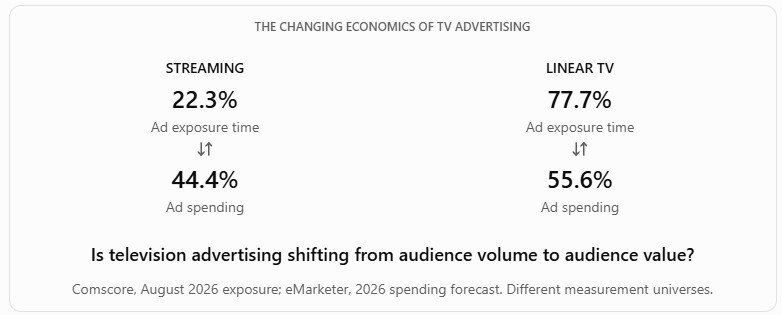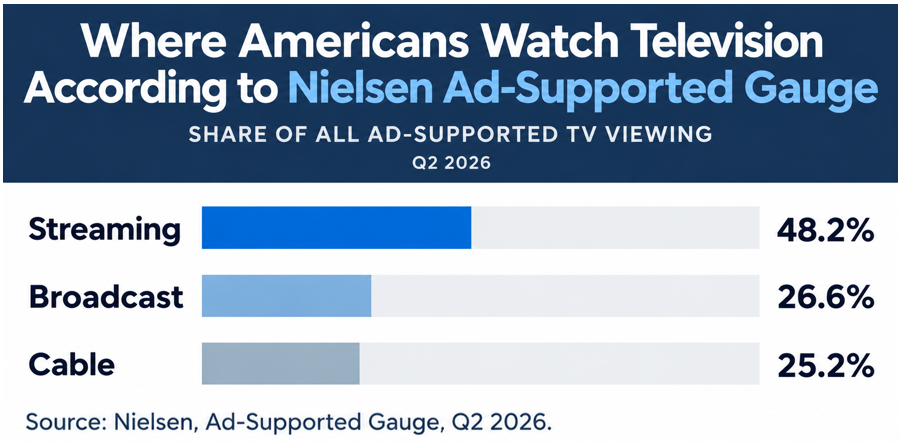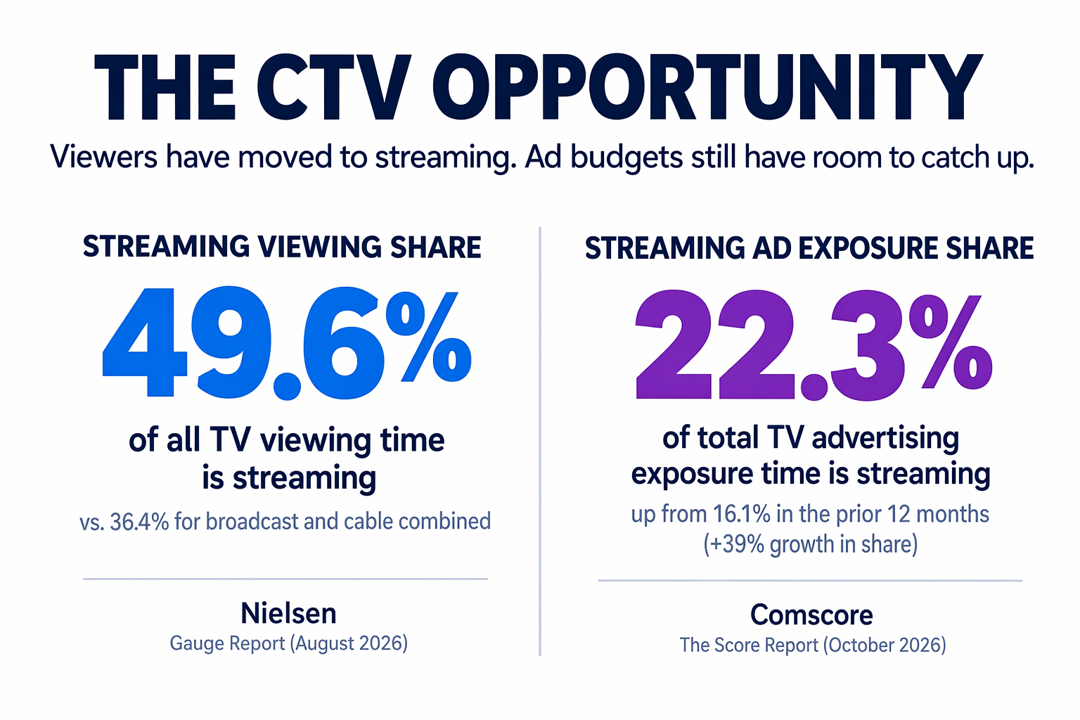




CTV is changing who can afford to advertise on television. By combining fragmented streaming audiences with precise targeting and flexible budgets, CTV is opening the door to a new generation of advertisers who previously couldn't justify the cost of traditional TV.
For decades, television advertising was largely a game of scale.
A local business might only need to reach 10,000 qualified households,
but traditional television often meant paying to reach hundreds of thousands of households outside its target audience.
CTV has fundamentally changed that equation.
One of the most overlooked reasons is the long tail of television viewing.
Today, audiences are fragmented across hundreds of streaming publishers, apps, and channels.
What once made television advertising more complicated has become an opportunity.
CTV technology aggregates these fragmented audiences, allowing advertisers to reach specific households across multiple publishers, regardless of which programs they're watching.
Think about what that means for a local medical practice, home services contractor, specialty retailer, or small business that previously couldn't justify the expense of television.
They can now advertise on the biggest screen in the house with greater control over:
Geography: Reach the ZIP codes and householdsthat matter.
Budget: Buy impressions rather than entireprogram audiences.
Frequency: Better manage how often householdssee their ads.
Accountability: Measure delivery and evaluate campaign performance.
To be fair, broadcast and cable have long offered affordable advertising options.
But affordability and efficiency aren't necessarily the same thing.
CTV's greatest growth opportunity may not be taking advertising dollars away from traditional television.
It may be bringing entirely new advertisers into television advertising.
The long tail isn't just changing how America watches television.
It's changing who can afford to advertise on it.

We help agencies and businesses plan, buy, and measure CTV | OTT advertising with full transparency and proven results.
ConnectADtv
4209 Deepwater Lane
Tampa Florida 33615
© 2026 ConnectADtv. All Rights Reserved.